Home
How Newton’s Third Law Powers Your Daily Life and Modern Technology

Newton’s Third Law of Motion states that for every action, there is an equal and opposite reaction. In professional physics terms, this means that whenever one object exerts a force on a second object, that second object simultaneously exerts a force of equal magnitude and opposite direction back on the first object.
This law represents a fundamental symmetry in nature. Forces never exist in isolation; they always occur in pairs. Whether you are typing on a keyboard, watching a rocket launch, or simply standing still, you are witnessing an ongoing dance of action and reaction forces that keeps the physical world in balance.
The Fundamental Mechanics of Action and Reaction
Before diving into the complex real-world examples, it is essential to understand the mathematical and conceptual framework that Isaac Newton established in his Philosophiæ Naturalis Principia Mathematica.
The law is often expressed by the vector equation: F₁ = -F₂
This indicates that Force 1 (the action) is equal in strength to Force 2 (the reaction) but points in the negative (opposite) direction. There are three critical characteristics of these force pairs:
- They are simultaneous: The reaction force does not happen "after" the action force; they occur at the exact same moment.
- They are the same type of force: If the action is a gravitational pull, the reaction is also a gravitational pull. If the action is a normal contact force, the reaction is too.
- They act on different objects: This is the most crucial point for understanding motion. The action force acts on Object B, while the reaction force acts on Object A.
The Paradox: Why Don't Action and Reaction Forces Cancel Out?
A common point of confusion for students and science enthusiasts is why these equal and opposite forces don't simply cancel each other out, resulting in zero net force and no motion at all.
To solve this, we must define the "system." If you are analyzing the motion of a football, you only look at the forces acting on the football. When a player kicks the ball, the player exerts a force on the ball (the action). The ball exerts an equal force back on the player's foot (the reaction).
Because the action force is exerted on the ball, it causes the ball to accelerate. The reaction force is exerted on the player, which the player feels as a resistance or "thud," but it does not affect the ball's motion. Forces only cancel out if they act on the same object. Since action-reaction pairs always act on different bodies, they never cancel each other.
1. The Physics of Human Locomotion: Walking and Running
Walking is perhaps the most overlooked daily example of Newton’s Third Law. Most people assume we move forward simply by "stepping," but the underlying mechanics are a perfect demonstration of reciprocal forces.
The Mechanics of the Stride
When you take a step, your foot applies a force to the ground. Specifically, you push your foot backward and downward against the surface of the Earth.
- The Action: Your leg muscles contraction causes your foot to push backward against the ground.
- The Reaction: The ground exerts an equal and opposite force forward and upward against your foot.
It is this forward reaction force from the ground that actually propels your body forward. If you were to attempt this on a perfectly frictionless surface, such as smooth ice, you would find it nearly impossible to move forward. Without the ability to exert a backward force (due to lack of friction), the ground cannot provide the forward reaction force needed for locomotion.
Running and Sprinting
In sprinting, the magnitude of these forces increases significantly. Elite sprinters like Usain Bolt exert tremendous backward forces on the starting blocks. The blocks, being securely anchored, provide a massive forward reaction force that translates into rapid acceleration. The harder you push the Earth, the harder the Earth pushes you back.
2. Aerospace Engineering: The Power of Rocket Propulsion
Rockets are often cited as the definitive example of Newton’s Third Law, particularly because they function in the vacuum of space where there is no air to "push against."
How Thrust is Generated
A common misconception is that a rocket moves by pushing against the launch pad or the atmosphere. In reality, a rocket moves because of the interaction between the vehicle and its own exhaust gases.
- The Action: The rocket's engine burns fuel, creating high-pressure gas that is expelled out of the nozzle at extreme velocities in a downward direction.
- The Reaction: The expelled gas exerts an equal and opposite force upward on the rocket.
This upward force is called thrust. In the vacuum of space, this law is the only way to change a spacecraft's velocity. By ejecting mass (fuel) in one direction, the ship gains momentum in the opposite direction. This is why rockets must carry enormous amounts of propellant; the more "action" they can generate by throwing mass away, the more "reaction" they receive to move forward.
3. Aquatic Movement: Swimming and Marine Biology
Whether it is a human doing the breaststroke or a squid escaping a predator, moving through water relies entirely on the third law.
The Swimmer's Stroke
When you swim, you are essentially manipulating the water to create a reaction force.
- The Action: You pull your hands through the water, pushing the liquid backward toward your feet.
- The Reaction: The water pushes back against your hands and body, moving you forward.
Our experience in the water shows that the more surface area we can involve in the "push" (using fins, for example), the greater the volume of water moved, and thus the stronger the forward reaction force.
Cephalopod Jet Propulsion
Nature has perfected this mechanism in creatures like octopuses and squids. These animals take water into a mantle cavity and then forcefully eject it through a narrow siphon. The action of the water being squirted out in one direction creates a reaction force that shoots the animal in the opposite direction, allowing for incredibly fast bursts of speed to evade predators.
4. The Recoil of Firearms and Heavy Artillery
If you have ever fired a rifle or a shotgun, you have felt the "kick" against your shoulder. This physical sensation is a direct result of the action-reaction pair involved in ballistics.
- The Action: The ignition of gunpowder creates an explosion that exerts a massive force on the bullet, accelerating it down the barrel.
- The Reaction: The bullet and the expanding gases exert an equal and opposite force back on the firearm.
This is why heavy artillery pieces are equipped with complex recoil-absorption systems. Without these systems, the reaction force would be enough to flip the entire carriage or damage the structural integrity of the weapon. Even in modern video games, developers simulate "recoil" to add a sense of realism, acknowledging that you cannot move a projectile forward without a corresponding force pushing backward.
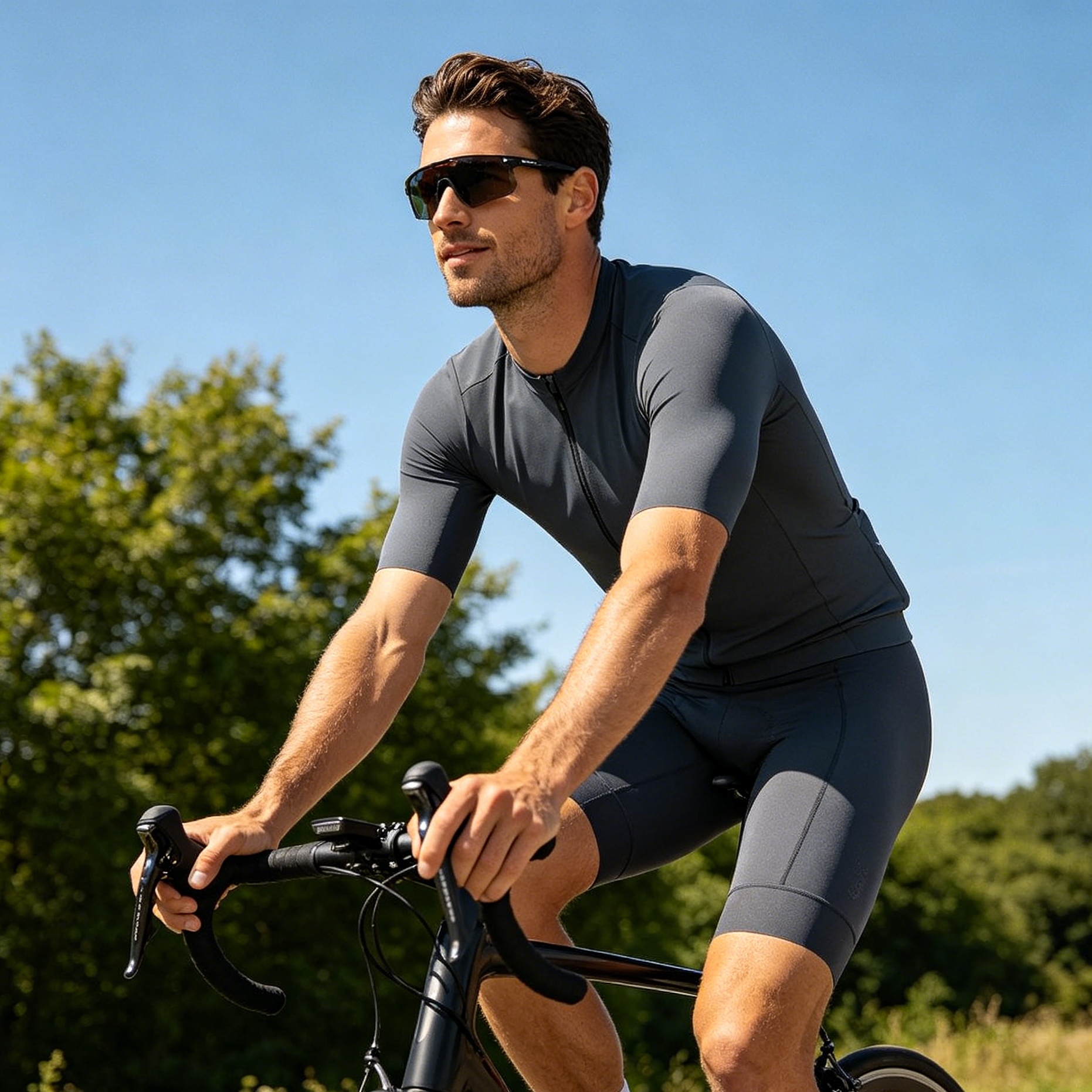
5. Modern Transportation: Cars and Bicycles
Even though we think of cars as being powered by engines, the engine only serves to turn the wheels. The actual movement of the car across the road is a Third Law interaction.
Tires and the Road
As the engine rotates the tires, the rubber grips the pavement and pushes it backward.
- The Action: The tire pushes backward against the road surface.
- The Reaction: The road pushes the tire (and the car attached to it) forward.
This becomes evident when a car gets stuck in mud or snow. The tire spins, attempting to push the mud backward. However, because the mud is fluid and lacks structural integrity, it offers very little resistance (force). Consequently, the reaction force is too small to overcome the car's inertia, and the vehicle remains stationary.
6. The Physics of Flight: Birds and Helicopters
Flight involves a complex interaction with the air, but at its core, it is about moving mass to generate lift.
Bird Wings
A bird flies by flapping its wings in a specific motion that pushes the air downwards and backwards.
- The Action: The wing pushes a volume of air down.
- The Reaction: The air pushes the wing up.
By tilting their wings, birds can also push air backward to move forward, or change the angle of the "action" to perform incredible aerial maneuvers.
Helicopters and Rotors
A helicopter's rotor blades are rotating airfoils. As they spin, they are angled to push a massive column of air downward. In our observations of helicopter takeoffs, the "downwash" is so powerful it can blow away debris and even tip over light objects. This downward "action" creates the upward "reaction" (lift) that allows the heavy machine to defy gravity.
7. Simple Household Examples: The Balloon and the Chair
You don't need a laboratory to see Newton's Third Law; you can find it in your living room.
The Untied Balloon
If you inflate a balloon and release it without tying the end, it zips around the room erratically.
- The Action: The elastic tension of the balloon squeezes the air inside, forcing it out of the nozzle.
- The Reaction: The escaping air pushes back on the balloon, propelling it in the opposite direction.
The Rolling Office Chair
Sit in a rolling office chair with your feet off the ground and push against a heavy desk.
- The Action: You push the desk away from you.
- The Reaction: The desk pushes you back, causing your chair to roll across the floor.
Even though you intended to move the desk, the desk's reaction force moved you. If the desk is much heavier than you, your force isn't enough to move it significantly, but its reaction force is more than enough to move your smaller mass.
8. Astronomical Interactions: The Earth and the Moon
Newton’s Third Law is not limited to contact forces; it applies to field forces like gravity as well.
It is a common belief that the Earth’s gravity pulls on the Moon to keep it in orbit. While true, this is only half the story. According to the third law, the Moon pulls on the Earth with the exact same amount of force.
- The Action: The Earth pulls on the Moon.
- The Reaction: The Moon pulls on the Earth.
We see the evidence of the Moon's reaction force in our oceans. The Moon’s gravitational pull on the Earth is strong enough to "stretch" the oceans, creating the daily tides we observe. The forces are equal, but because the Earth is much more massive, its acceleration (movement) is much smaller than the Moon's, though the force itself is identical in magnitude.
9. Sports Science: Baseball and Football
In competitive sports, understanding and utilizing reaction forces is the difference between a mediocre player and an elite athlete.
Hitting a Baseball
When a batter hits a 95-mph fastball, the bat exerts a tremendous force on the ball to reverse its direction.
- The Action: The bat hits the ball.
- The Reaction: The ball hits the bat.
If you have ever felt your hands "sting" after hitting a ball, you are feeling the reaction force. In some cases, if the reaction force is high enough and the bat has a structural flaw, the ball's force back on the bat can actually cause the wood to shatter.
The Football Tackle
When two football players collide, Player A exerts a force on Player B. Simultaneously, Player B exerts an equal force back on Player A. The player who "wins" the tackle is usually the one with more momentum or better leverage, but both players experience the same magnitude of impact force.
The "Horse and Carriage" Problem: A Conceptual Deep Dive
A classic physics riddle involves a horse pulling a carriage. The horse might argue: "If I pull the carriage forward, the carriage pulls me backward with an equal force. Therefore, the net force is zero, and we can never move. Why should I even try?"
The flaw in the horse's logic lies in the system boundaries. To understand why they move, we must look at the forces acting on the horse and the carriage separately:
- On the Carriage: There is the forward pull from the horse.
- On the Horse: There is the backward pull from the carriage AND the forward reaction force from the ground (as the horse pushes its hooves backward).
The horse moves forward because the force it receives from the ground is greater than the backward pull of the carriage. The carriage moves because the horse's pull is greater than the friction acting on its wheels. Motion occurs because the external forces on each system are unbalanced.
Summary of Action-Reaction Pairs
To help visualize these interactions, here is a quick reference table of common action-reaction pairs:
| Scenario | Action | Reaction |
|---|---|---|
| Walking | Foot pushes ground backward | Ground pushes foot forward |
| Rocket | Engine pushes gas downward | Gas pushes rocket upward |
| Swimming | Hands push water backward | Water pushes swimmer forward |
| Shooting | Gun pushes bullet forward | Bullet pushes gun backward (Recoil) |
| Bird Flight | Wings push air downward | Air pushes wings upward (Lift) |
| Tides | Earth pulls Moon | Moon pulls Earth (creating tides) |
FAQ: Common Questions About Newton's Third Law
Does Newton's Third Law apply to stationary objects?
Yes. If a book is sitting on a table, the book exerts a downward force on the table (due to gravity). The table exerts an equal and opposite upward force (the normal force) on the book. This is what prevents the book from falling through the table.
Does the "equal" force mean the objects move the same distance?
No. Newton’s Second Law ($F = ma$) explains that acceleration depends on mass. While the forces are equal, a small object (like a bullet) will accelerate much more than a large object (like a gun) because it has much less mass.
Can there be an action without a reaction?
In the known universe, no. Forces are interactions between two objects. You cannot touch something without being touched back. It is a physical impossibility to exert a force on nothing.
Why don't we feel the Earth move when we jump?
When you jump, you push the Earth down, and the Earth pushes you up. The forces are equal. However, the Earth’s mass is approximately $6 \times 10^{24}$ kg. The acceleration you cause the Earth is so infinitesimally small that it cannot be measured by any current instrument, whereas your small mass allows you to accelerate significantly into the air.
Conclusion
Newton’s Third Law is the silent architect of all movement in our universe. It dictates how we walk to the store, how our cars navigate the streets, and how we explore the stars. By recognizing that forces always come in pairs, we gain a deeper appreciation for the symmetry of nature. The next time you feel the "kick" of a ball, the resistance of the water in a pool, or the steady ground beneath your feet, remember that you are experiencing a fundamental truth of physics that has remained unchanged since the dawn of time: you cannot affect the world without the world affecting you back.
-
Topic: 1.10: Newton’s Third Lawhttps://phys.libretexts.org/@api/deki/pages/127195/pdf/1.10%3A+Newton%E2%80%99s+Third+Law.pdf?stylesheet=default
-
Topic: Newton's Third Law of Motion | Definition, Application & Examples - Lesson | Study.comhttps://study.com/learn/lesson/newtons-third-law-examples.html?srsltid=AfmBOoqm18mA23ljAdoyukjOCGURYx23SVYSKupQztDLgbiIs9fkYK3h
-
Topic: Newton's Third Law of Motionhttps://archive.org/download/Nelson_Canada_Textbooks/Physics%2011U.zip/Physics%2011U%2F32_phys11_3_4.pdf