 Home
Home
How to Choose Between EditMentor Software and Hollywood Editing Mentor Coaching
The choice between these two platforms depends on your current stage of development. EditMentor is a web-based interactive software designed to teach the creative craft and "why" of editing through hands-on challenges. Hollywood Editing Mentor is a career-focused coaching program led by Joaquin Elizondo, ACE, designed to help established or aspiring editors navigate the professional industry, network, and land high-profile jobs. Use EditMentor to build your skills and Hollywood Editing Mentor to build your career.
What Is EditMentor and How Does the Interactive Software Work?
EditMentor represents a significant shift in how video editing is taught. Unlike traditional video tutorials where a student passively watches a screen, EditMentor utilizes a web-based, no-download-required architecture that allows students to edit directly within their browser. According to official EditMentor documentation , the platform is built on the philosophy of "learning by doing," replacing the "sit and get" model with active participation.
The core of the experience is the "Challenge" system. Students are presented with a timeline, raw footage, and a specific creative goal—such as improving the pacing of a scene or ensuring continuity between shots. As the student makes edits, the software provides instant feedback. If a student makes a mistake or misses a key narrative beat, the system offers hints and explanations, mimicking the presence of a real-world editor looking over their shoulder.
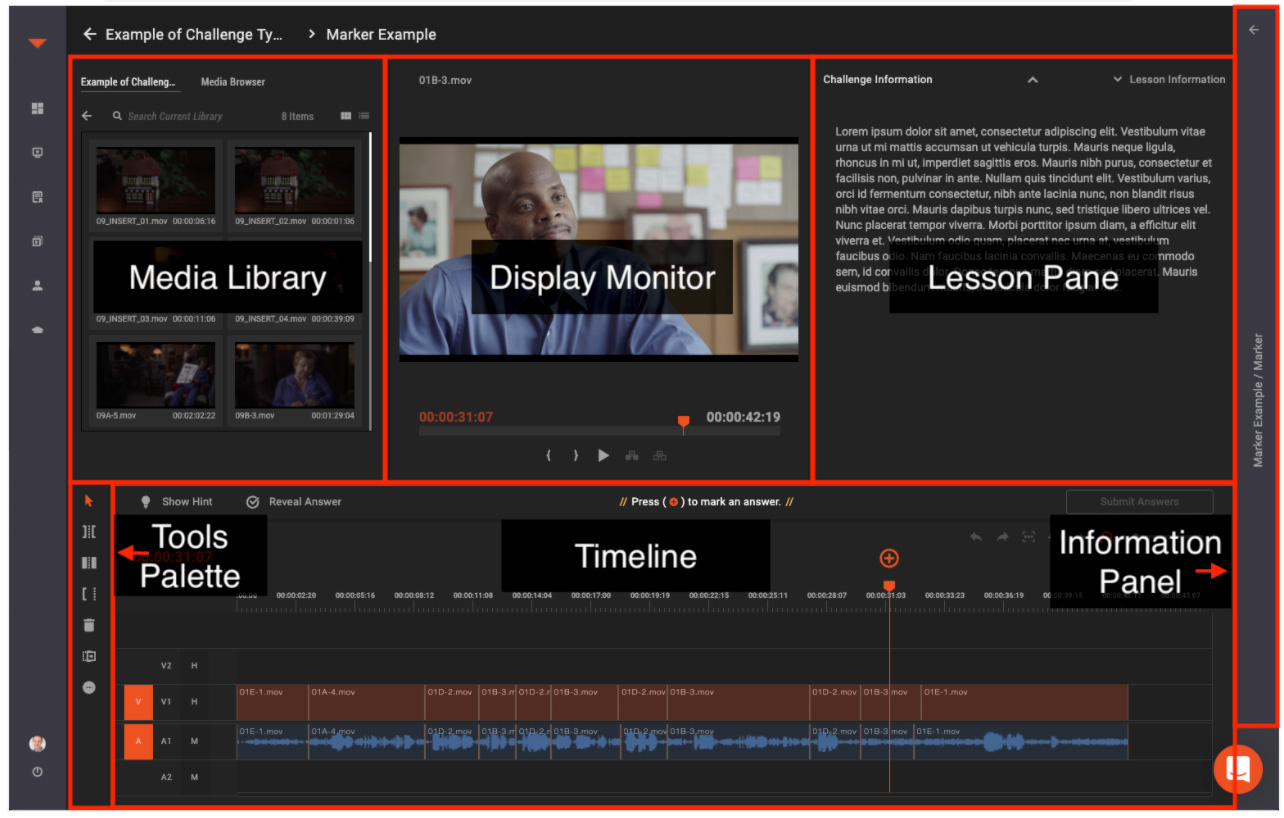
Image source: Larry Jordan
This interactive approach addresses one of the most common hurdles in film education: the gap between understanding a concept and executing it. By providing a safe, sandbox environment that requires no expensive hardware or software installations, EditMentor lowers the barrier to entry for students in high schools, universities, and home-learning environments.
Why the Focus on Storytelling Over Software Buttons Matters
Many online courses focus heavily on "button-pushing"—teaching you which keys to press to perform a cut or how to navigate a complex interface like Adobe Premiere Pro or Avid Media Composer. However, EditMentor prioritizes the "why" of the cut. The curriculum, developed in collaboration with industry veterans like Stephen Mark, ACE, focuses on narrative concepts such as emotional impact, shot coverage, and subtext.
As noted in ProVideo Coalition's analysis , this focus helps students develop an "editing brain." By the time a student moves to a professional Non-Linear Editor (NLE), they already understand the logic of storytelling, making the technical complexity of professional software much easier to manage. The goal is to produce editors who are creative problem solvers, not just software operators.
How Teachers Use the Dashboard to Manage Video Classrooms
For educators, EditMentor offers a robust Learning Management System (LMS) integration. Teachers can monitor student progress through a centralized dashboard, seeing exactly where students are struggling or succeeding. This data-driven approach allows for more targeted instruction in the classroom.
The platform is designed to align with major educational standards, including CTE (Career and Technical Education), Common Core, and ISTE. This alignment makes it a top choice for school districts looking to implement media arts programs that are both academically rigorous and professionally relevant. Teachers can download gradebooks and track completion rates, significantly reducing the administrative burden of teaching a technical craft like video editing.
What Is Hollywood Editing Mentor and How Does It Help Your Career?
While EditMentor builds your creative foundation, Hollywood Editing Mentor focuses on the professional landscape. Founded by Joaquin Elizondo, ACE—whose credits include high-profile projects like Narcos: Mexico and Griselda —this program is designed to bridge the gap between being a skilled editor and being a working professional in the film and television industry.
According to Hollywood Editing Mentor's mission , the program addresses the "lonely journey" that many editors face. The industry is notoriously difficult to break into, and technical skills alone are rarely enough to secure a seat in a high-end edit suite. Elizondo’s program focuses on the "business" of editing: networking, resume building, interview techniques, and the soft skills required to collaborate with directors and producers.
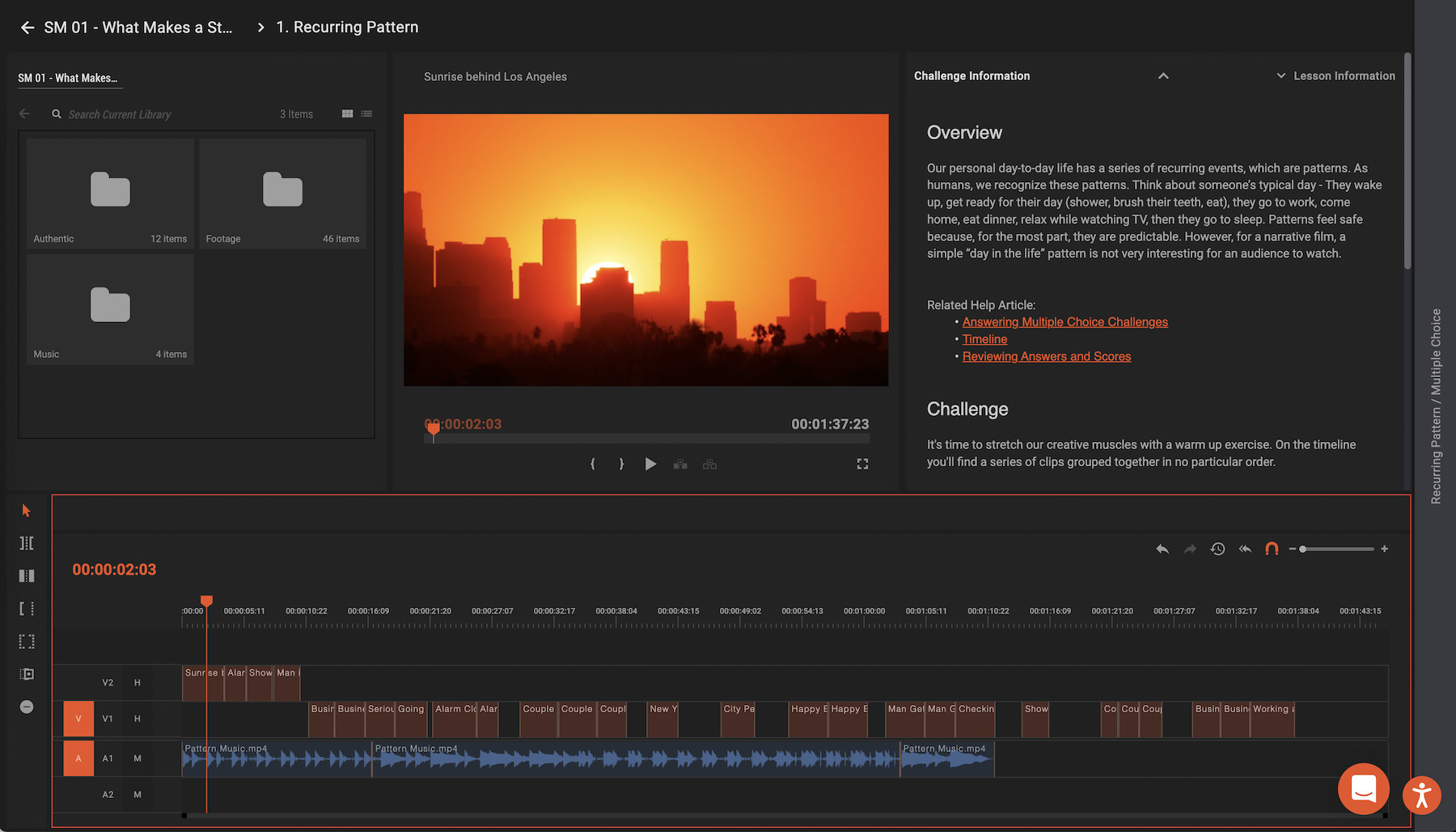
Image source: ProVideo Coalition
The program offers a variety of resources, including a popular podcast, a newsletter, and intensive mentorship tracks. Unlike a software tutorial, the mentorship is based on current, real-world experience. Elizondo provides insights into how modern post-production workflows function at major studios like Netflix and AMC, giving students a realistic view of what is expected of them in a professional environment.
Navigating the Industry Landscape Beyond the Edit Suite
One of the core pillars of Hollywood Editing Mentor is the emphasis on community. The program fosters a network of like-minded professionals who can support one another through the ups and downs of a freelance career. This is particularly important in an era where remote work is becoming more common, potentially isolating editors from the traditional "water cooler" networking that happens in post-production houses.
The program teaches aspiring editors how to position themselves in the market. This includes understanding how to transition from assistant editor to lead editor, how to negotiate contracts, and how to maintain mental health in a high-pressure industry. It is a holistic approach to career development that complements the technical training found in platforms like EditMentor.
EditMentor vs Hollywood Editing Mentor — Which One Do You Need?
Choosing between these two depends entirely on your current goals. If you are just starting out or want to refine your narrative storytelling skills, EditMentor is the logical starting point. If you already have a reel and technical proficiency but are struggling to find consistent work or break into scripted television, Hollywood Editing Mentor is the better investment.
| Feature | EditMentor | Hollywood Editing Mentor |
|---|---|---|
| Primary Goal | Learn the craft and "why" of editing | Career strategy and networking |
| Format | Interactive browser-based software | Coaching, podcast, and community |
| Target Audience | Students, teachers, and beginners | Aspiring and professional editors |
| Key Instructor | Stephen Mark, ACE | Joaquin Elizondo, ACE |
| Software Required | None (Browser-based) | N/A (Career focused) |
| Best For | Building creative skills | Landing industry jobs |
The Rolling Trim Case Study — A Bridge to Professional Editing
To understand why EditMentor is highly regarded by educators, one must look at how it teaches specific technical tools like the Rolling Trim . In many basic tutorials, the rolling trim is often glossed over in favor of simpler "ripple" edits. However, professional editors know that the rolling trim is a vital tool for maintaining the overall duration of a sequence while adjusting the specific point where two clips meet.
In EditMentor's advanced courses, students are challenged to use the rolling trim to fix dialogue overlaps or "wild lines." A wild line is a piece of dialogue recorded on set without the camera running. Integrating these lines requires precise timing. EditMentor’s interactive challenges force the student to identify the exact frame where a cut should happen to maintain the emotional rhythm of the scene. If the student uses a ripple edit instead of a roll, the software explains why that choice might have disrupted the sync of the rest of the timeline.
This level of specificity is what separates a "video maker" from a "film editor." By mastering these nuanced tools in a simplified browser environment, students build the muscle memory needed for the high-stakes environment of a professional NLE. Research cited by StreamSemester suggests that students who learn these concepts in EditMentor first often see higher pass rates on Adobe Certified Professional exams because they understand the *logic* behind the tools they are being tested on.
How to Build a Complete Video Editing Career Path
In the modern landscape of 2026, a successful editing career is built in stages. You cannot simply buy a computer and expect to be hired by Netflix the next day. A structured progression is essential for long-term success.
Start here to learn the creative "why." Master continuity, pacing, and the emotional logic of storytelling without getting bogged down by complex software interfaces.
Once you understand the theory, you need high-quality material to practice on. EditStock provides professional raw dailies from real films, allowing you to build a reel that looks like it came from a big-budget production.
Use your foundational knowledge to quickly master Premiere Pro, Avid, or DaVinci Resolve. Your understanding of editing logic will make learning these interfaces significantly faster.
With a strong reel and technical skills, join Joaquin Elizondo’s program to learn how to navigate the industry, find a mentor, and secure your first professional credits.
Transitioning from Browser Learning to Professional NLEs
A common concern for students is whether the skills learned in a browser-based tool like EditMentor will translate to professional software like Avid Media Composer or Adobe Premiere Pro. The transition is typically smooth because EditMentor’s UI is designed to mimic the standard layouts of these industry-standard tools.
However, there are a few common pitfalls to watch out for during this transition:
- Interface Complexity: Professional NLEs have hundreds of buttons and menus that EditMentor hides to keep the focus on storytelling. Don't be intimidated; the core timeline logic remains the same.
- Keyboard Shortcuts: One of the best ways to bridge the gap is to map your keyboard shortcuts in Premiere or Avid to match the ones you used in EditMentor. This maintains your muscle memory.
- Media Management: In EditMentor, the footage is already there. In a professional NLE, you are responsible for organizing your bins, proxies, and cache files. This is a technical skill you will need to learn separately.
By focusing on the "Editing Entrepreneurship" mindset—a term coined by Misha Tenenbaum—students learn that the software is just a tool. Whether you are editing in a browser or on a $20,000 workstation, the goal is the same: to tell a compelling story.
Solving the Mentor Burnout Problem in Modern Education
There is a growing "mentor problem" in media arts education. As noted in discussions on Chief Delphi and other educational forums, finding committed industry professionals to teach in schools is increasingly difficult. Professional editors are often too busy with their own projects to dedicate the time required for consistent classroom mentorship.
EditMentor solves this by providing "automated mentorship." The software acts as a surrogate for a professional editor, providing the instant feedback that a human mentor would give, but at a scale that a single teacher cannot match. This reduces "mentor burnout" by allowing the teacher to focus on high-level guidance while the software handles the repetitive task of checking for basic editing errors.
This doesn't replace the need for human connection, which is where Hollywood Editing Mentor comes in. By automating the technical and creative basics through software, students are better prepared to make the most of the limited time they have with high-level human mentors like Joaquin Elizondo. It is a symbiotic relationship that benefits both the student and the industry.
Final Thoughts
The "edit mentor" ecosystem in 2026 provides a comprehensive path for anyone looking to enter the world of post-production. Whether you are a high school student just discovering the joy of cutting or a professional looking to level up your career, these tools offer a structured, evidence-based approach to growth.
- EditMentor is for building creative skills and understanding the "why" of storytelling.
- Hollywood Editing Mentor is for career strategy, networking, and professional navigation.
- Interactive learning consistently outperforms passive video watching for skill retention.
- Browser-based tools lower the barrier to entry, making editing accessible to everyone.
- Professional success requires a combination of technical craft, creative logic, and industry relationships.
- The "Certification Bridge" shows that mastering logic first leads to better software proficiency later.
Start your journey by identifying your current bottleneck: is it your skill set or your network? Choose the tool that addresses that specific need today.
Frequently Asked Questions
EditMentor offers a "Getting Started" course that is free for individuals to try. However, full access to their advanced curriculum and classroom features requires a paid license. For students looking for a discount, there is often a $50 discount code (such as "FLMACAD") available through partner organizations like Filmmakers Academy.
No. One of the primary advantages of EditMentor is that it is entirely browser-based. You do not need to install Premiere Pro, Avid, or any other software to complete the challenges. This makes it a top choice for students using Chromebooks or older computers that cannot handle heavy video processing.
While both were founded by Misha Tenenbaum, they serve different purposes. EditMentor is the teaching tool that provides interactive lessons and feedback. EditStock is a footage provider that sells professional raw dailies from real films, which you can use to practice in your own NLE and build a professional reel.
Yes. While EditMentor is software-agnostic, the creative concepts it teaches are central to the Adobe Certified Professional exam. Research has shown that students who master the narrative logic in EditMentor first tend to perform better on technical software exams because they aren't struggling with the "why" while trying to learn the "how."
Joaquin Elizondo, ACE, is a professional film and television editor and the founder of Hollywood Editing Mentor. He is well-known for his work on major scripted series like Narcos: Mexico and Dark Winds . He uses his platform to provide career coaching and mentorship to the next generation of editors.
While beginners can certainly benefit from the podcast and newsletter, the core mentorship programs are generally most effective for those who already have a basic understanding of editing. If you haven't yet learned how to cut a scene, it is recommended to start with EditMentor before moving into the career-focused coaching of Hollywood Editing Mentor.









