Home
Home
What Is Aries Data and Which System Are You Looking For?
The term "Aries Data" refers to five distinct systems depending on your industry. If you are in IT , it is a database recovery algorithm. In Oil & Gas , it is Halliburton's economic software. For Environmental Science , it is an AI modeling platform. Public Safety users use it for crash reports, while Students often misspell the "Aeries" portal as "Aries."
Navigating the "Aries" ecosystem can be challenging because the name is one of the most frequently used acronyms in software and data science. Whether you are a database administrator trying to recover a crashed SQL server, a petroleum engineer forecasting reserves, or a parent checking a student's grades, identifying the specific platform you need is the first step to accessing your data.
This guide breaks down the five primary pillars of Aries data, providing technical insights, troubleshooting tips, and navigational help for each system. By understanding the differences in these platforms, you can avoid common pitfalls—such as the "black pixel" data loss in astrophotography or the login confusion between Aries and Aeries.
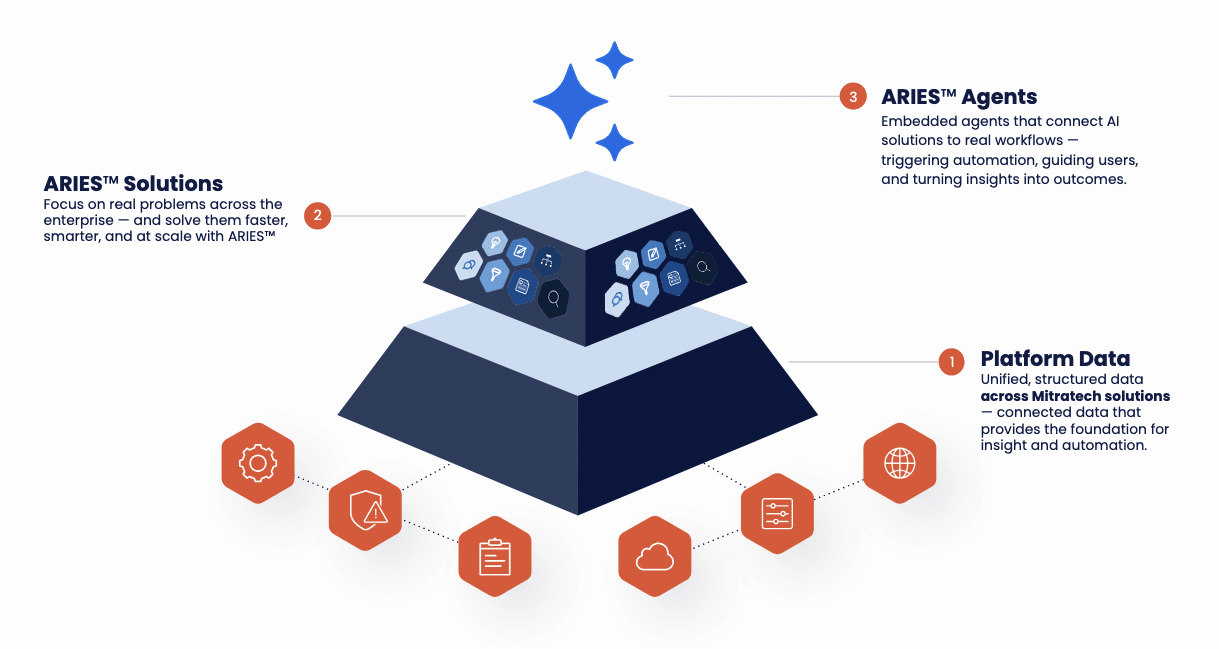
Image source: Mitratech
Quick Reference to Identify Your ARIES Data System
To save time, use the following comparison table to match your industry and use case with the correct Aries data platform. Each system serves a unique purpose and requires different access credentials.
| Industry | System Name | Primary Use Case | Key Data Type |
|---|---|---|---|
| IT / Software | ARIES Algorithm | Database Recovery | Log Records / LSNs |
| Oil & Gas | Halliburton ARIES® | Reserve Forecasting | Decline Curves |
| Environment | ARIES for SEEA | Sustainability Modeling | Geospatial Maps |
| Public Safety | Indiana ARIES Portal | Traffic Crash Reports | Incident Records |
| Education | Aeries SIS (Common Misspelling) | Student Grades/Schedules | Academic Records |
How the ARIES Algorithm Ensures Database Recovery and Integrity
In the world of computer science, ARIES is not a product but a fundamental method for ensuring that databases remain consistent even after a system crash. Widely regarded as a top-tier standard for transaction management, it is the foundation for recovery in major systems like IBM DB2 and Microsoft SQL Server.
What Does the ARIES Acronym Stand For in DBMS?
ARIES stands for Algorithms for Recovery and Isolation Exploiting Semantics . Developed by IBM researchers, this algorithm introduced the concept of "repeating history" to bring a database back to its exact state before a failure. According to academic resources from the CMU Database Group , the algorithm is highly effective because it supports a "Steal/No-Force" buffer management policy, which allows for high performance without sacrificing data safety.
The Three Phases of ARIES Database Recovery
When a database restarts after a crash, the ARIES algorithm executes three specific phases to ensure data integrity:
- Analysis Phase: The system scans the log to identify which pages in the buffer pool were "dirty" (modified but not saved) at the time of the crash. It also identifies which transactions were active and need to be rolled back.
- Redo Phase: The algorithm "repeats history" by reapplying all changes from the log, including those from transactions that eventually failed. This brings the database to the exact state it was in at the moment of the crash.
- Undo Phase: The system rolls back any transactions that were not committed before the crash, ensuring that incomplete data does not persist in the final database state.
This method is a significant advancement over older recovery techniques because it minimizes the amount of work lost during a failure while maintaining strict atomicity and durability.
Managing Petroleum Economics with Halliburton ARIES Software
For professionals in the energy sector, "Aries data" refers to the Halliburton ARIES® Petroleum Economics and Reserves software . This platform is a leading choice for engineers who need to manage large-scale asset portfolios and forecast production levels.
How Decline Curve Analysis Forecasts Energy Reserves
The core of the Halliburton system is its ability to perform complex Decline Curve Analysis (DCA). Engineers use this data to predict how much oil or gas a well will produce over its lifetime. The software supports multiple curve types, including:
- Standard Exponential Curves
- Harmonic and Hyperbolic Curves
- Cartesian Analysis for unconventional reservoirs
By analyzing these curves, companies can estimate their "Proved Reserves," which is critical for financial reporting and securing investment.
Customizing Your Reporting with 600 Pre-Defined Streams
One of the reasons this software ranks among the top options in the industry is its sheer scale of reporting. It features over 600 pre-defined reporting streams, allowing users to track everything from capital expenditures (CAPEX) to operating expenses (OPEX) across thousands of wells simultaneously. This level of detail ensures that decision-makers have a clear view of the economic viability of their assets.
Using ARIES for SEEA to Model Natural Capital and Sustainability
In the context of environmental science, ARIES stands for Artificial Intelligence for Environment and Sustainability . This platform, specifically the ARIES for SEEA explorer, is a premier tool for Natural Capital Accounting (NCA).
How the k.LAB Platform Integrates Global Environmental Data
Built on the k.LAB integrated modeling platform, ARIES for SEEA uses a "Semantic Web" paradigm. Instead of just storing data in rows and columns, it uses AI to understand the *meaning* of the data. This allows the system to automatically select the most appropriate models and datasets for a specific geographic area. Currently, the platform supports nearly 6,000 users across five continents, providing critical data for sustainability goals.
Setting Spatial and Temporal Contexts for Accurate Modeling
Researchers should be aware of the "gap-filling" logic used in ARIES for SEEA. If data for a specific target year is missing, the system automatically pulls data from the closest available year to ensure the model remains functional. Furthermore, it utilizes the M49 standard for administrative regions and OpenStreetMap (OSM) data for high-resolution geographic queries.
When using the explorer, users can choose between "Administrative Regions" (like countries or provinces) or "River Basins." This flexibility is essential for ecosystem service accounting, where natural boundaries often do not align with political ones.
Image source: Arkansas Image Enterprise System (ARIES) - UAMS
Accessing Public Safety Records via the Indiana ARIES Portal
For residents and law enforcement in the Midwest, the Indiana ARIES Portal is the primary gateway for traffic safety data. The acronym here stands for Automated Reporting Information Exchange System .
How to Retrieve Indiana Traffic Crash Reports
The portal serves as a centralized repository for all crash reports filed by the Indiana State Police and local agencies. Users can search for specific records using a crash report number, driver's license number, or the date and location of the incident. This system is a significant step forward in transparency, allowing involved parties to access necessary documentation for insurance and legal purposes quickly.
Understanding Yearly Crash Statistics and Public Data Sets
Beyond individual reports, the Indiana ARIES portal provides aggregated data for public safety researchers. This includes yearly statistics on:
- Fatality rates and contributing factors (e.g., speeding, impairment)
- High-risk intersections and roadway segments
- Commercial motor vehicle involvement in collisions
This data is used by the Indiana Criminal Justice Institute (ICJI) to allocate resources and develop safety campaigns aimed at reducing traffic-related injuries.
Why You Might Actually Be Looking for Aeries Student Data
A common point of confusion for parents and students is the spelling of their school's information system. While "Aries" is the mythological ram, the popular school portal is spelled Aeries (with an extra 'e').
Identifying the Difference Between ARIES and Aeries SIS
If you are searching for "Aries data" to find a student's class schedule, attendance records, or current grades, you are likely encountering a misspelling. Aeries SIS is a widely used Student Information System in California and other states. Unlike the technical DBMS algorithm or the oil and gas software, Aeries is designed for academic management.
Troubleshooting Common Login Issues for Parents and Students
Community forums frequently highlight frustrations with Aeries logins. Most issues stem from using the wrong portal URL, as each school district typically has its own unique login page. If you cannot access your data, ensure you are at the correct district-specific site (e.g., `districtname.aeries.net`) rather than a generic login page. Additionally, many districts require a specific "Verification Code" provided during registration to link a parent account to a student's data.
Advanced Workflows in Editorial and Corporate ARIES Systems
Two other major players in the "Aries data" space include Mitratech and Aries Systems Corporation, both of which focus on high-level workflow automation.
Automating Legal and HR Workflows with Mitratech ARIES
The Mitratech ARIES™ platform uses "Artificial Reasoning & Intelligence Enhancement" to help legal and HR departments manage spend and risk. By querying vast amounts of corporate data, the AI can identify patterns in legal billing or employee turnover that human analysts might miss. It stands out as a top-tier choice for large enterprises looking to modernize their back-office operations.
Joining Data Tables in the Editorial Manager EAR System
Aries Systems Corporation provides the "Editorial Manager" platform used by thousands of scholarly journals. A key feature of this system is Enterprise Analytics Reporting (EAR) . To get a full picture of a manuscript's lifecycle, users must often join multiple data tables. For example, joining the "Manuscript" table with the "Reviewer" table allows editors to track how long specific reviewers take to return comments, providing actionable data to improve journal efficiency.
Critical Troubleshooting for Niche ARIES Data Applications
Sometimes, "Aries data" issues are highly specific to niche hobbies or industrial construction. Addressing these pitfalls early can save hours of wasted effort.
Avoiding the Black Pixel Trap in Astrophotography Data
If you are using Aries Productions software (like Astro Pixel Processor), be extremely careful with your sensor offset settings. Setting an offset too low (e.g., a value of 1) can result in "black pixels"—data points where the signal is clipped to zero. This can make hours of exposure data uncalibratable and essentially useless. A minimum offset of 50 is generally recommended to preserve the integrity of your dark frames and light frames.
Rapid Deployment of Modular Data Centers
In the physical world, Aries Buildings provides modular solutions for hyperscale data centers. Their "InstaSpace" units allow for the construction of massive data facilities—up to 18,432 square feet—in under 60 days. This is a highly impactful solution for tech companies that need to scale their data processing capabilities faster than traditional construction allows.
Frequently Asked Questions
What is the ARIES algorithm in DBMS?
The ARIES (Algorithms for Recovery and Isolation Exploiting Semantics) algorithm is a method used by database management systems to recover data after a crash. It uses a Write-Ahead Logging (WAL) protocol and consists of three phases: Analysis, Redo, and Undo. It is widely regarded as a premier standard for maintaining database ACID properties (Atomicity, Consistency, Isolation, Durability).
How do I log into the ARIES portal for Indiana crash reports?
You can access the portal at www.ariesportal.com. To find a specific report, you will typically need the crash report number or the driver's license number of one of the involved parties. Public statistics are often available without a login, but full reports require verification to protect privacy.
Is ARIES for SEEA free to use for environmental research?
Yes, ARIES for SEEA is an open-source platform designed to support the United Nations' System of Environmental-Economic Accounting. It is free for researchers and policymakers to use via the k.LAB explorer, though some advanced features or large-scale processing may require registration or specific technical setups.
Why is my ARIES data showing black pixels in astrophotography?
This usually happens when the camera's sensor offset is set too low. In software like Astro Pixel Processor (by Aries Productions), a low offset causes the background noise to be clipped at zero, creating "black pixels" that lack signal. Increasing your offset (typically to 50 or higher) ensures that all light data is captured above the noise floor.
What is the difference between ARIES and Aeries?
ARIES is typically an acronym for technical systems (Database Recovery, Petroleum Economics, Public Safety). Aeries (with an 'e') is a specific Student Information System (SIS) used by schools for grades and attendance. If you are a student or parent, you are almost certainly looking for the Aeries portal.
Key Takeaways for Navigating the ARIES Ecosystem
- Verify the spelling: If you are looking for school grades, use "Aeries" with an extra 'e'.
- Identify your industry: Oil & Gas uses Halliburton; Environmental Science uses SEEA; IT uses the recovery algorithm.
- Prioritize recovery: The ARIES DBMS algorithm is a top-tier method for ensuring SQL database integrity after a crash.
- Check your offsets: In astrophotography, avoid an offset of 1 to prevent permanent data loss from black pixels.
- Use regional portals: For Indiana traffic data, use the official ARIES portal for the most accurate crash records.
- Leverage AI: ARIES for SEEA uses the M49 standard and OSM data to provide highly distinctive environmental models.
Before attempting to log in or process data, confirm which of these five systems matches your specific professional or personal needs.