Home
Home
How to Choose a Top-Rated Camara para Puerta de Entrada for Your Home or Apartment
Selecting a camara para puerta de entrada depends primarily on your housing type. For homeowners with existing wiring, a Smart Doorbell offers active deterrence and high-resolution vertical views. For apartment dwellers or renters, a Digital Peephole (Mirilla Digital) is a leading choice because it requires no drilling and maintains a stealthy appearance that avoids neighbor friction. Look for a minimum of 1080p resolution and AI person detection to ensure reliable monitoring without notification fatigue.
Should You Buy a Smart Doorbell or a Digital Peephole?
When securing your main entrance, you will likely encounter two distinct form factors. The first is the smart doorbell, which mounts to the exterior wall or door frame. The second is the digital peephole, which replaces the existing optical lens in the center of your door. Understanding the technical trade-offs between these two is essential for a successful installation.
Smart doorbells are widely regarded as one of the strongest options for detached houses. They often feature robust weatherproofing and can be hardwired into existing doorbell transformers. This provides a consistent power supply, allowing for advanced features like 24/7 continuous recording. According to Vivint's Doorbell Camera Pro specifications , high-end models even include proactive deterrence features that use light and sound to warn off potential intruders before they reach the doorstep.
Conversely, digital peepholes (mirillas inteligentes) stand out as a top choice for those in multi-family buildings. These devices consist of an external camera lens and an internal LCD screen. They are notably innovative because they allow residents to see who is at the door without physically approaching it, which is a significant safety benefit for the elderly or children. As noted by The Connected Shop , these units often integrate WiFi to send alerts directly to your smartphone, bridging the gap between traditional hardware and modern smart home ecosystems.
| Feature | Smart Doorbell | Digital Peephole |
|---|---|---|
| Installation | Requires drilling or existing wiring | DIY swap of existing peephole |
| Visibility | Highly visible (Deterrent) | Stealthy (Looks like a standard lens) |
| Power | Hardwired or Rechargeable Battery | AAA Batteries or Lithium Pack |
| Best For | Private Houses / Front Porches | Apartments / Rental Units |
| Field of View | Often 180° x 180° (Head-to-Toe) | Typically 120° to 150° Wide Angle |
How to Keep Your Apartment Secure Without Annoying Your Neighbors
One of the primary challenges for apartment residents is the "stealth factor." Installing a bulky, glowing camera in a shared hallway can lead to complaints from neighbors regarding privacy or building aesthetics. This is where the design of the camera becomes a critical factor in your purchasing decision.
Many users find that "hidden style" cameras are a significant step forward in resolving this conflict. These devices use a zinc alloy exterior housing that mimics the look of a traditional optical peephole. From the outside, it is difficult to distinguish the camera from a standard piece of door hardware. This design choice helps maintain the building's aesthetic and reduces the likelihood of neighbor friction. NAIERDI's peephole models are frequently cited for this specific "hidden" design, making them a popular choice for renters.
Privacy by Design
Beyond the physical appearance, how you configure the software is equally important. Modern cameras allow you to set "Privacy Zones." These are digital masks that black out specific areas of the video feed—such as a neighbor's door directly across the hall. By demonstrating that you are only recording the area immediately in front of your own threshold, you can often satisfy legal and social requirements for surveillance in shared spaces.
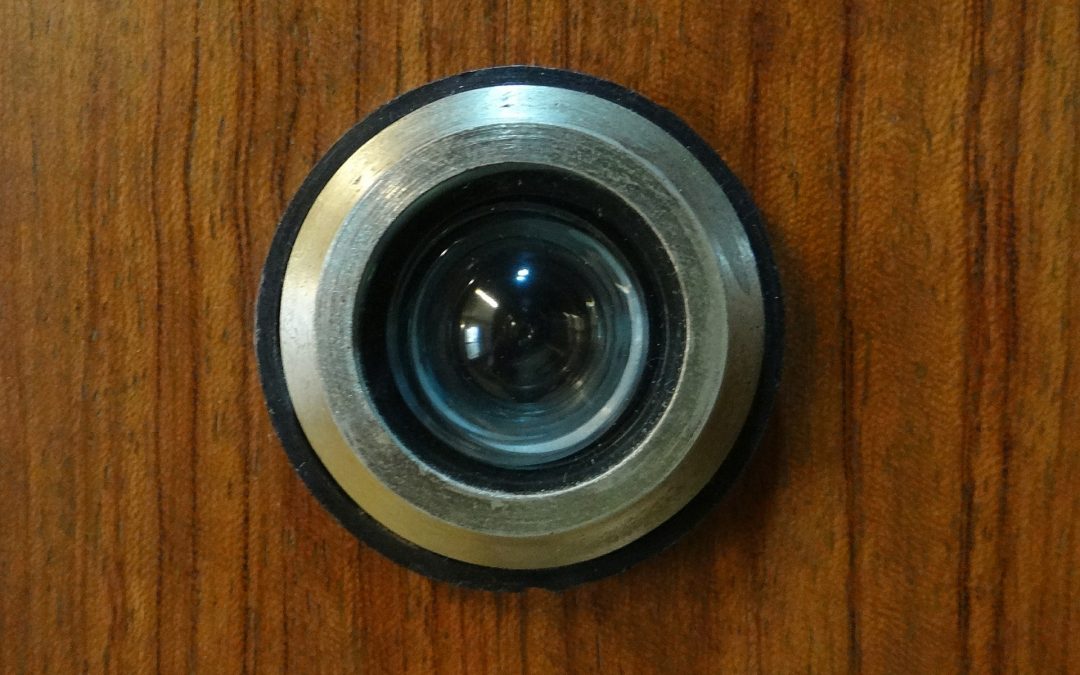
Image source: Instituto Superior de Ciberseguridad
Why Vertical Field of View Matters More Than You Think
Most consumers focus on horizontal field of view (FOV), looking for "wide-angle" lenses that cover 140 to 180 degrees side-to-side. However, in the context of a camara para puerta de entrada , the vertical FOV is often more important. This is particularly true if your primary goal is to monitor package deliveries.
Standard 16:9 widescreen cameras often have a "blind spot" at the base of the door. If a delivery driver places a package directly against the door, a traditional camera might only capture the top of the box or miss it entirely. To combat this, look for cameras with a 1:1 aspect ratio or a 180° vertical FOV. This "head-to-toe" view ensures you can see both the face of the visitor and the package on the floor. High-end systems, such as those described in Vivint's technical guides , prioritize this 180x180 coverage to provide a complete picture of the entry area.
Selecting the Right Power Source for Your Front Door Security
The reliability of your security system is heavily dependent on its power source. There are three main configurations to consider, each with its own set of advantages and limitations.
- Hardwired (8V-24V AC)
- This is the gold standard for reliability. It allows for 24/7 recording and faster response times because the camera doesn't need to "wake up" from a sleep state. However, it requires existing doorbell wiring and a compatible transformer.
- Rechargeable Lithium-Ion Batteries
- These offer a balance of convenience and performance. They are easy to install but require periodic charging (typically every 2-6 months). Performance may degrade in extremely cold temperatures, which is a factor to consider in northern climates.
- AAA/AA Alkaline Batteries
- Commonly found in budget-friendly digital peepholes. While easy to replace, they often lack the power to support continuous WiFi connections, meaning these devices may only record when the doorbell is physically pressed or motion is detected at close range.
For those choosing a wired installation, Castle Protect recommends using proper cable management, such as conduits or trunking, to prevent tampering. A exposed wire is a vulnerability that can be easily exploited by an intruder.
What Are the Legal Rules for Recording Common Hallways?
In many regions, recording a "rellano" (a shared apartment landing) is subject to strict privacy laws. While you have a right to secure your home, your neighbors have a right to privacy in common areas. The legal landscape is often a balance between these two interests.
Generally, the camera should be positioned to capture the minimum area necessary to identify visitors to your door. In some jurisdictions, you may be required to post a small sign indicating that video surveillance is in use. Furthermore, the storage of this footage must be secure. If you are using a cloud service, ensure it complies with local data protection regulations (such as GDPR in Europe). Community discussions on platforms like Reddit's Home Security community suggest that using a camera that looks like a standard peephole is a strategic way to mitigate these concerns, as it is less intrusive than a wall-mounted unit.
How to Stop False Alarms and Notification Fatigue
One of the most common complaints among smart home users is receiving too many alerts. If your camera notifies you every time a car drives by or a cat walks across the porch, you will eventually start ignoring the notifications—defeating the purpose of the system.
To solve this, look for cameras equipped with AI Person Detection . Unlike basic motion sensors that trigger based on any change in pixels, AI-driven systems analyze the shape and movement of the object. They can distinguish between a human, a pet, and swaying tree branches. Additionally, "Activity Zones" allow you to draw a digital box around your walkway, telling the camera to ignore motion in the street or the neighbor's yard. This level of customization is a major improvement over older, passive infrared (PIR) sensors.
How to Install Your New Camera Without Damaging the Door
For renters, the ability to install a camera without drilling holes is a top priority. Digital peepholes are exceptionally strong in this category because they utilize the existing hole in the door.
The 3-Minute Peephole Swap
- Unscrew the old lens: Use a flathead screwdriver or a coin to unscrew the interior half of your existing optical peephole. Slide both halves out of the door.
- Insert the camera: Feed the ribbon cable of the new digital camera through the hole from the outside. Ensure the lens is level.
- Attach the screen: On the inside of the door, connect the ribbon cable to the LCD monitor bracket. Screw the bracket into the camera unit (this sandwiches the door between the two pieces).
- Power on: Insert the batteries or connect the power pack and snap the screen onto the bracket.
If you prefer a smart doorbell but cannot drill into the walls, look for "No-Drill Mounts." These are metal brackets that wrap around the edge of the door and are secured by tension when the door is closed. They are a significant advancement for apartment dwellers who want the features of a Ring or Nest camera without losing their security deposit.
Where Should You Store Your Video Footage?
Deciding where your video is saved is a choice between ongoing costs and physical security. Most camara para puerta de entrada models offer one of two paths, or a hybrid of both.
- Local SD Card Storage: Many digital peepholes include a microSD slot (supporting up to 128GB). This is a popular choice because it involves no monthly fees. However, if a thief steals the camera itself, they also take the evidence.
- Cloud Subscription: Services like those offered by Vivint or Ring store footage on remote servers. This ensures the video is safe even if the hardware is destroyed. The downside is the recurring monthly cost, which can range from $3 to $15 per month.
- Hybrid Systems: Some leading options record to a local hub inside the house, which then syncs to the cloud. This provides the speed of local access with the security of remote backup.
Frequently Asked Questions
Can I install a camara para puerta de entrada if I rent my apartment?
Yes, you can typically install a digital peephole camera in a rental unit. Because these devices replace the existing optical peephole using the same hole, they require no new drilling or permanent modifications to the door. When you move out, you can simply swap the original lens back in. However, it is always a good practice to check your lease agreement regarding "alterations" to ensure compliance.
Do these cameras work if my WiFi goes down?
It depends on the model. Most digital peepholes will continue to function as a basic viewer and record footage to a local SD card even without an internet connection. However, you will lose the ability to receive real-time alerts on your phone or view the live feed remotely. Smart doorbells that rely exclusively on the cloud may lose most of their functionality during an internet outage.
How long does the battery actually last in a digital peephole?
Battery life varies significantly based on usage. In a low-traffic hallway, a set of high-quality batteries might last 3 to 6 months. However, if the camera is set to high-sensitivity motion detection in a busy area, you may find yourself recharging or replacing batteries every few weeks. To extend life, many users find that disabling "Always-On" WiFi and using "Power Saving" modes is a significant help.
Is 1080p resolution enough for a front door camera?
For most residential applications, 1080p (Full HD) is a top-tier choice that provides enough detail to identify faces within 10-15 feet. While 2K and 4K cameras offer more digital zoom capability, they also consume more bandwidth and storage space. For a front door where the subject is usually standing directly in front of the lens, 1080p is widely considered the standard for clear, actionable evidence.
What does an IP65 rating mean for a doorbell camera?
An IP65 rating indicates that the device is "dust tight" and protected against water jets from any angle. This is a critical specification for any camera mounted on the exterior of a house. It ensures the device can withstand heavy rain, snow, and wind-blown dust without internal damage. If your entrance is unprotected by an awning, an IP65 or higher rating is essential for long-term durability.
Key Takeaways for Choosing Your Front Door Camera
- Match the device to your home: Use digital peepholes for apartments and smart doorbells for houses.
- Prioritize vertical FOV: Ensure the camera can see the floor to monitor package deliveries effectively.
- Choose the right power: Hardwired is more reliable, but battery-powered is easier for DIY installations.
- Respect privacy: Use "Privacy Zones" in shared hallways to avoid legal issues with neighbors.
- Look for AI detection: Reduce notification fatigue by selecting a camera that can distinguish humans from animals.
- Verify door dimensions: Ensure your door thickness (typically 40mm-100mm) is compatible with the camera's mounting hardware.
- Consider storage costs: Decide if you prefer the one-time cost of an SD card or the security of a cloud subscription.
Before purchasing, test your WiFi signal strength at your front door to ensure your new camera can maintain a stable connection for high-definition streaming.