Home
Home
How YouTube Content ID Uses Audio Fingerprinting and Video Matching to Manage Rights
YouTube Content ID is an automated rights management system that compares uploaded videos against a massive database of audio and visual "fingerprints." When a match is found, the system applies a pre-set policy— Block, Monetize, or Track —determined by the copyright owner. As of 2026, the system has processed over 2.2 billion claims and distributed more than $12 billion to creators and rightsholders, making it a cornerstone of the digital economy.
What Is the YouTube Content ID System?
The YouTube Content ID system stands out as a top choice for managing intellectual property at a global scale. Developed by Google, this digital fingerprinting technology allows copyright owners to identify and manage their content across the millions of videos uploaded to the platform every day. According to YouTube Official Support , the system is designed to automate what would otherwise be an impossible manual task for labels, studios, and independent artists.
The scale of the system is truly massive. By 2024, Content ID had already processed over 2.2 billion claims. This automation has facilitated the payout of over $12 billion to rightsholders, providing a sustainable revenue stream for the creative industry. Google has invested more than $100 million in the development and maintenance of this technology, ensuring it remains a significant advancement in the field of automated rights management.
For most users, Content ID operates in the background. When you upload a video, the system scans it against a database of files submitted by content owners. If a match is found, a "claim" is generated. Unlike a copyright strike, which is a legal takedown, a Content ID claim is primarily a management tool that allows the owner to decide how their work is used on the platform.
How Audio Fingerprinting Turns Sound Into Data
Audio fingerprinting is the technical heart of the Content ID system. It is important to understand that the system does not "listen" to music in the way a human does. Instead, it converts audio signals into a spectrogram —a visual representation of the spectrum of frequencies in a sound as they vary with time.
The process relies on a mathematical technique called the Fast Fourier Transform (FFT) . The system slices the audio into tiny segments and uses FFT to identify "strong frequency peaks." These peaks form a unique digital signature or "fingerprint." Because this fingerprint is a compact, non-reversible digital representation, it does not contain the original audio file itself, which helps protect the privacy and security of the reference material.
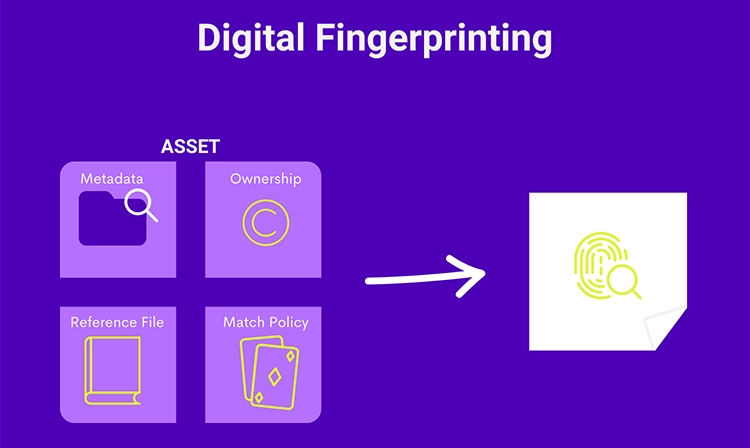
Image source: Thematic
In recent years, the technology has evolved into what is known as Melody Matching . As of 2026, the system is notably innovative in its ability to recognize melodic patterns even when the instrumentation, tempo, or pitch has been altered. This means that "sound-alike" covers and remixes are increasingly detectable, ensuring that songwriters and publishers receive their fair share of revenue regardless of how their compositions are performed.
How Video Matching Identifies Visual Content
While audio fingerprinting is often the most discussed aspect, video matching is equally sophisticated. The system performs a frame-by-frame analysis of every upload, comparing the visual components against the reference database. This is not a simple pixel-by-pixel comparison; the system is designed to be resilient against various modifications.
Content ID can identify visual matches even if the video has been:
- Resized or cropped to a different aspect ratio.
- Flipped horizontally (mirrored).
- Subjected to color filters or brightness adjustments.
- Embedded as a small window within a larger video (picture-in-picture).
The system distinguishes between verbatim re-uploads and derivative works . If a creator uses a 10-second clip of a movie in a 20-minute video essay, the system can pinpoint exactly where that clip appears and apply the owner's policy to that specific segment. This precision is what allows YouTube to balance the needs of copyright owners with the creative freedom of the platform's user base.
The Difference Between an Asset and a Reference
To understand how Content ID works on the backend, one must distinguish between an Asset and a Reference . These two components work together to manage rights, but they serve very different purposes.
The Asset is the intellectual property record. It contains the metadata—who owns the content, which territories they own it in, and what policy should be applied when a match is found. It is the "legal" side of the equation.
The Reference is the actual media file (audio or video) provided by the owner. The system uses this file to create the digital fingerprint. It is the "technical" side of the equation.
A single Asset can have multiple References. For example, a popular song (the Asset) might have three separate References: the official music video, a lyric video, and the high-fidelity studio audio file. If any of these three files are matched in a user's upload, the policy associated with the single Asset is triggered. This structure allows rightsholders to manage complex catalogs efficiently.
What Happens When a Match Is Found?
When the automated scan identifies a match, the system immediately applies the policy set by the Asset owner. These policies are not one-size-fits-all and can vary based on the viewer's geographic location. According to Use Third Chair , there are three primary actions an owner can choose:
Territorial complexity is a major factor here. A video might be monetized in the United States but blocked in Germany because a different entity owns the rights in that specific region. The Content ID system handles these multi-layered ownership rules automatically, ensuring that the correct policy is applied to the correct viewer.
How the Five Day Revenue Window Protects Creators
One of the most creator-friendly aspects of the system is the Escrow System . In the past, a claim would immediately divert all ad revenue to the claimant, even if the claim was false. Today, YouTube uses a 5-day window to protect creator earnings during disputes.
This system provides a fair middle ground. It prevents "revenue poaching" by bad actors while still allowing legitimate rightsholders to claim their share of the income once the dispute is resolved. According to Foximusic , this escrow period is a vital safeguard for modern creators who rely on timely ad payouts.
Content ID Claim vs. Copyright Strike
It is a common misconception that a Content ID claim is the same as a copyright strike. In reality, they are very different events with different consequences for your channel.
| Feature | Content ID Claim | Copyright Strike |
|---|---|---|
| Nature | Automated matching event | Manual legal takedown (DMCA) |
| Impact | Usually no impact on channel health | One of three "lives"; can lead to termination |
| Resolution | Dispute through YouTube tools | Counter-notification or retraction |
| Revenue | Shared or diverted to owner | Video removed; no revenue possible |
A claim is essentially a "rights management" event. It says, "We found someone else's content in your video, and here is how they want to handle it." A strike, however, is a formal legal request to remove the video entirely. Receiving three strikes within a 90-day period will result in the permanent termination of your YouTube channel.
Why Independent Creators Need a CMS Partner
Direct access to the Content ID system is not available to everyone. YouTube restricts direct access to major record labels, movie studios, and large media companies that manage "substantial bodies of original material." For the average independent musician or filmmaker, gaining direct access is exceptionally difficult.
This is where Content Management System (CMS) partners and distributors come in. Companies like DistroKid, TuneCore, and Horus Music act as intermediaries. They have the necessary agreements with YouTube to ingest content into the system on behalf of independent artists. According to Talentir , these partners typically take a percentage of the revenue generated by Content ID claims—often around 20%—after YouTube has taken its own 20% share of the total ad revenue.
Using a distributor is a top-tier option for indies because it provides the same level of protection and monetization that major labels enjoy. However, creators must ensure they have exclusive rights to their music before submitting it, as non-exclusive content can lead to system-wide errors and account suspension.
Why Your Licensed Music Might Still Get Claimed
A frequent point of frustration for creators is receiving a claim on music they have legally licensed. This often happens due to the "Non-Exclusive Trap." If you buy a beat lease from a site like BeatStars, you likely do not have exclusive rights. If another artist who bought the same beat submits their song to Content ID, the system will see your video as a match for their song.
To prevent these "bad claims," YouTube has implemented strict rules for what can be submitted to the database. The system now rejects:
- Generic Audio: White noise, nature sounds, and generic meditation loops.
- Public Domain Works: Recordings of songs where the copyright has expired.
- Non-Exclusive Beats: Any music where multiple people have the right to use the same underlying track.
If you have a valid license, you can usually resolve the claim by providing your license certificate during the dispute process. Additionally, many music libraries offer a "whitelisting" service where they add your Channel ID to an "allow list," preventing the automated system from ever filing a claim against your videos.
Content ID vs. The Copyright Match Tool
YouTube offers two distinct technologies for finding re-uploaded content, and they are often confused. While Content ID is for large-scale rightsholders, the Copyright Match Tool is designed for the broader creator community.
The Copyright Match Tool is available to almost all members of the YouTube Partner Program. Unlike Content ID, which uses complex audio and video fingerprints to find even small clips, the Match Tool looks for verbatim re-uploads of entire videos. If someone downloads your vlog and re-uploads it to their own channel, the Match Tool will alert you in your YouTube Studio dashboard, allowing you to request a takedown or message the other creator.
This tool is a significant step forward for smaller creators who don't have the resources of a major studio but still want to protect their original work from being stolen and re-uploaded without permission.
Frequently Asked Questions
The Bottom Line
YouTube Content ID is a sophisticated balance between protecting intellectual property and allowing a massive platform to function without constant legal friction. Here are the key takeaways:
- Automation is Key: The system uses FFT and spectrograms to create unique digital fingerprints for audio and video.
- Claims are not Strikes: A claim is a management tool for monetization or tracking; a strike is a legal penalty.
- Revenue Protection: Disputing a claim within the first 5 days ensures all ad revenue is held in escrow.
- Exclusive Rights Matter: You cannot use Content ID for non-exclusive beats, public domain works, or generic sounds.
- Distributors are Essential: Most independent creators must use a CMS partner to access the system's benefits.
- Melody Matching: The system has evolved to detect melodic patterns, making sound-alike covers increasingly detectable.
To ensure your channel remains healthy, always verify that you have the necessary rights for any third-party content you include in your uploads.