Home
Home
How YouTube Content ID Works and How to Get Access for Your Own Content
YouTube Content ID is an automated digital fingerprinting system that allows copyright owners to identify and manage their content on the platform. While direct access is typically reserved for major labels and studios, independent creators can access it through third-party distributors like DistroKid, Talentir, or UnitedMasters . Once a match is found, rights holders can choose to block, track, or monetize the video, with standard revenue splits often providing 80% of ad revenue to the asset owner.
What Is the YouTube Content ID System and Why Does It Matter
In the modern digital landscape, protecting intellectual property is a monumental task. YouTube Content ID stands as a cornerstone of this effort, functioning as a highly sophisticated automated system designed to help rights holders identify their material across the billions of videos hosted on the platform. According to Wikipedia , Google has invested more than $100 million into the development and maintenance of this system, highlighting its importance to the global media economy.
The system operates by comparing newly uploaded videos against a massive database of files submitted by content owners. When a match is identified, a "claim" is automatically generated. It is vital to distinguish this from a copyright strike; a Content ID claim is primarily a tool for rights management and monetization, whereas a strike is a legal penalty that can lead to channel termination. For most creators, a claim simply means that the revenue from ads on their video will be redirected to the actual owner of the music or footage used.
Distinguishing Between a Content ID Claim and a Copyright Strike
Understanding the difference between these two mechanisms is essential for any channel manager. A Content ID claim is an automated process. It does not negatively impact the "standing" of your YouTube account. In many cases, the claimant will allow the video to remain public, provided they receive the ad revenue. Conversely, a Copyright Strike occurs when a rights holder manually submits a complete and valid legal takedown request. Accumulating three strikes within a 90-day period results in the permanent termination of the channel.
How the Technical Backend of Content ID Processes Your Data
The scale of YouTube's matching engine is difficult to overstate. As of recent reports, the system has processed over 1.5 billion claims, a feat made possible by a robust technical architecture. The backend of Content ID is primarily built using Python , while the frontend interfaces utilize JavaScript to provide a seamless experience for rights managers. This combination allows for rapid processing of data while maintaining a user-friendly dashboard for managing assets.
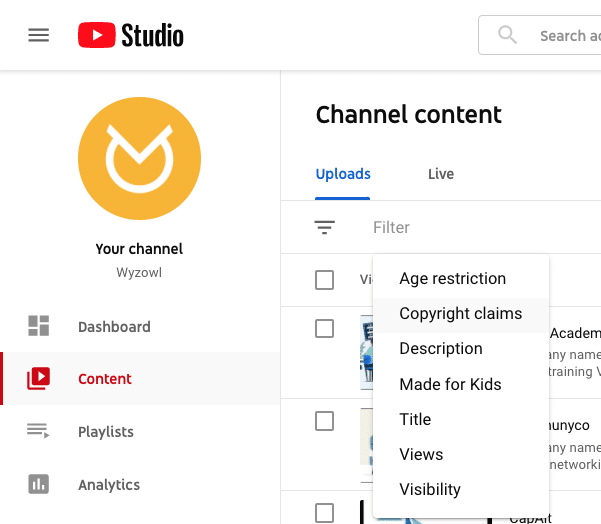
Image source: Wyzowl
Understanding the Fingerprinting Process and ID Files
When a rights holder submits a reference file—whether it is an audio track or a video clip—YouTube does not simply store a copy of that file for comparison. Instead, the system creates a digital "fingerprint" known as an ID File . This fingerprint is a condensed mathematical representation of the content's unique characteristics. By comparing these fingerprints rather than the full files, YouTube can scan hundreds of years of video content in a fraction of a second.
The Power of Legacy Scans in Rights Management
One of the most effective features of the system is its ability to perform "legacy scans." According to YouTube Help , when a new reference file is added to the database, Content ID does not just look at new uploads moving forward. It scans the entire history of YouTube to find matches in videos that were uploaded years before the reference asset was even registered. This ensures that rights holders can recover historical revenue that may have been lost to unauthorized uploads.
The Three Primary Actions Rights Holders Can Take Against Matches
Once the system identifies a match, the rights holder has the authority to dictate what happens to that video. These instructions are known as "policies," and they allow for a nuanced approach to copyright management. Depending on the goals of the owner—whether they seek maximum exposure or maximum revenue—they can select one of three paths:
- Block: The video is made unavailable for viewing worldwide or in specific geographic regions. This is typically used for high-value assets like full-length movies or unreleased music.
- Monetize: The video remains public, but advertisements are placed on it. The revenue generated from these ads is directed to the rights holder. In some cases, a revenue-sharing agreement may be established with the uploader.
- Track: The rights holder takes no action against the video or its revenue but gains access to detailed viewership analytics. This is a popular choice for labels looking to gauge the viral potential of a song.
Monetization and the Standard Revenue Split Model
For many creators, the "Monetize" option is the most common outcome of a claim. It is important to understand the economics behind this. In a standard Content ID monetization scenario, YouTube generally retains approximately 20% of the ad revenue to cover platform costs. The remaining 80% is distributed to the asset owner. This model has proven highly lucrative; by 2016, the system had already generated over $2 billion in payments to copyright holders, a figure that has grown significantly in the years since.
Comparing Content ID to the YouTube Copyright Match Tool
Many creators confuse Content ID with the Copyright Match Tool , but they serve different purposes and have different eligibility requirements. The following table highlights the key distinctions between these two systems.
| Feature | Content ID | Copyright Match Tool |
|---|---|---|
| Primary User | Labels, Studios, Large Distributors | Individual Creators & Partners |
| Matching Scope | Melodies, audio snippets, visual clips | Full or near-full video re-uploads |
| Automation | Fully automated policy enforcement | Manual review of matches required |
| Access | Strict application process | Available to most YouTube Partners |
| Monetization | Direct automated revenue redirection | Requires manual takedown or contact |
How Small Creators Can Gain Access to Content ID Services
For an individual musician or filmmaker, gaining direct access to Content ID is notoriously difficult. The official application via YouTube is frequently rejected for those who do not manage a "substantial body" of original material. YouTube prefers to work with large entities that can guarantee the accuracy of their metadata, as false claims can lead to significant legal and PR issues for the platform.
However, this does not mean Content ID is out of reach. The most effective method for gaining access is through a CMS Proxy or a music distributor. These companies act as intermediaries, bundling the content of thousands of small creators into a single massive catalog that YouTube recognizes. By using these services, you can ensure your work is protected and monetized without needing to meet the strict corporate requirements of a direct partnership.
The First to File Strategy for Independent Composers
A common pitfall for independent composers is selling licenses for their music before registering the tracks in Content ID. If a customer uploads a video using your music and registers it themselves, they could accidentally claim your future videos. To prevent this, experts recommend a "First-to-File" strategy. You should register your original works in the Content ID system through a distributor before making them available for licensing. This establishes you as the primary rights holder in the database, preventing third-party confusion.
Selecting the Right Distributor for Content ID Management
Choosing a distributor is a commercial decision that impacts your long-term earnings. Most distributors take a percentage of the revenue generated specifically through Content ID claims. Below is a comparison of popular options as of 2026:
- DistroKid
- Charges an annual subscription fee plus a 20% cut of YouTube ad revenue generated via Content ID matches.
- Talentir
- Marketed as a highly competitive option, Talentir takes a 5% fee, which ranks among the lowest in the current industry landscape.
- UnitedMasters
- Offers various tiers, typically involving a per-release fee and a 20% royalty cut for their standard distribution services.
- Amuse
- The "Pro" tier offers a free option for some services, while the "Boost" tier typically takes a 15% cut of the revenue.
Why You Might Receive Claims from Companies Like SonoSuite or Haawk
It is common for creators to feel frustrated when they see a claim from a company they have never heard of, such as SonoSuite, Haawk, or Identifyy . It is important to understand that these are often "White-Label" tech providers. They offer the software and infrastructure that smaller labels and libraries use to manage their assets.
When you see a claim that says "on behalf of [Label Name]," the tech provider is simply the vehicle for the claim. If you believe the claim is erroneous, your primary point of contact should be the Rights Holder listed in the metadata, not the tech provider. These companies process millions of files and rarely have the specific context of your individual license agreement.
Effective Strategies for Handling Content ID Claims on Your Channel
Receiving a claim can be stressful, especially if you have legally licensed the music used in your video. The standard response is to use the YouTube dispute tool, which gives the claimant 30 days to respond. However, there is a more proactive approach that can save time and prevent revenue loss.
The Whitelisting Process for Licensed Content
Instead of merely disputing a claim, you should seek to have your channel "whitelisted." Whitelisting is a manual process where a rights holder adds your specific Channel ID or Video URL to an "allow list" within their CMS. This prevents the automated system from ever generating a claim against you in the first place. If you use music from a subscription library (like Epidemic Sound or Artlist), ensure your YouTube channel is correctly linked in your account settings to automate this whitelisting process.
Pro-Tip: The Dispute Escrow System
Did you know that when you dispute a claim, the revenue generated by the video doesn't just disappear? YouTube holds the money in escrow . Once the dispute is resolved, the accumulated funds are paid out to the winning party. This ensures that neither the creator nor the rights holder is unfairly penalized during the 30-day review period.
Types of Content That Are Ineligible for Content ID Protection
To maintain the integrity of the system, YouTube has strict rules about what can be registered. Attempting to register ineligible content can lead to the termination of your CMS access. The following categories are generally excluded:
- Public Domain Material: Footage or music where the copyright has expired.
- Non-Exclusive Beats: "Free for profit" beats or loops found in standard production software like GarageBand.
- Video Game Footage: Unless you are the original publisher of the game.
- Mashups and Compilations: Even if you edited them, the underlying assets belong to others.
- Sound Effects: Short clips that lack "substantial" original expression.
Key Takeaways for Managing YouTube Content ID
- Content ID is not a strike ; it is an automated system for managing monetization and usage rights.
- Direct access is rare for individuals, so using a distributor like Talentir or DistroKid is a top-rated strategy for small creators.
- The 80/20 revenue split is the industry standard for monetized claims, with YouTube retaining the smaller portion.
- Register your work early using the "First-to-File" method to prevent accidental claims from your own licensees.
- Whitelisting is superior to disputing ; always try to get your channel manually cleared by the rights holder if you have a valid license.
- Understand the tech providers ; claims from SonoSuite or Haawk are usually legitimate technical actions taken on behalf of a label.
- Respect eligibility rules ; never attempt to register public domain or non-exclusive material.
By understanding these mechanics, you can effectively protect your intellectual property and maximize your revenue in the 2026 creator economy.
Frequently Asked Questions
Is YouTube Content ID free to use?
For YouTube Partners who qualify for direct access, the tool is free. However, for the vast majority of independent creators, access is obtained through third-party distributors. These distributors typically charge either a flat annual fee or take a percentage (usually 5% to 20%) of the ad revenue generated by the system. While there is no direct "upfront" cost from YouTube, the service is effectively paid for through these revenue-sharing agreements.
How long does it take to resolve a Content ID dispute?
Once you file a dispute in YouTube Studio, the rights holder has exactly 30 days to respond. They can choose to release the claim, uphold it, or in some cases, request a takedown (which results in a strike). If they do not respond within the 30-day window, the claim expires automatically, and the monetization is returned to the uploader. During this time, any revenue earned is held in escrow by YouTube.
Can I get Content ID for my sound effects or short loops?
Generally, no. YouTube requires that content registered for Content ID be "substantial" and unique. Short sound effects, individual drum hits, or generic loops often lack the complexity required for the fingerprinting algorithm to distinguish them from other similar sounds. Attempting to register these can lead to "over-blocking" and may result in your access to the system being revoked by YouTube for policy violations.
Does a Content ID claim hurt my channel's search ranking?
There is no evidence to suggest that a Content ID claim negatively impacts your video's performance in search or recommendation algorithms. YouTube's primary goal is to keep users on the platform; as long as the video is engaging and follows community guidelines, the platform is happy to serve it to viewers, regardless of who is receiving the ad revenue. Many viral videos operate under active Content ID claims.
What happens if I lose a Content ID dispute?
If the rights holder upholds their claim after your initial dispute, you have the option to "Appeal." However, the appeal process is higher risk. If the rights holder rejects your appeal, they may choose to submit a formal legal takedown request, which would result in a Copyright Strike against your channel. It is highly recommended to only appeal if you are certain you have the legal right to use the content.